


What did the “Quo Vadis, Digital Czechia” pre-election conference bring?
What did the “Quo Vadis, Digital Czechia” pre-election conference bring?
A few weeks later and after the announcement of the results of this year’s European Parliament elections, let us look back at the conference on the digital economy Quo Vadis, Digital Czechia?, which we organised together with our partners from FocusOn on 23 May at the Přítomnost Theatre.
Legislative regulation stifles digital business
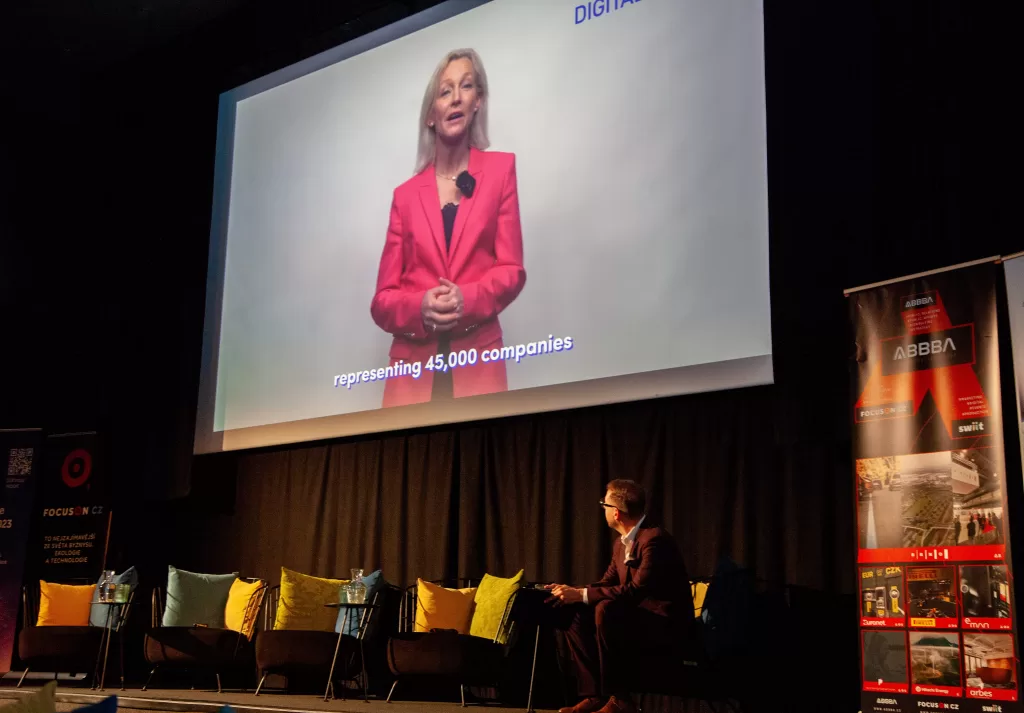
The whole event was divided into three discussion panels and two inputs from foreign guests. DIGITALEUROPE’s Executive Director Cecilia Bonefeld-Dahl opened the conference programme with a video presentation. In a rather sober spirit, she summarised all the challenges and problems Europe is facing in the field of innovation and the digital economy. She reiterated the need to allocate as much funding as possible to support the digital sector, the problem of the underdeveloped EU single market and expressed concern about the additional administrative burden resulting from excessive bureaucracy and legislative and regulatory rules in the digital area.
Czech companies are not fully prepared for the digital revolution
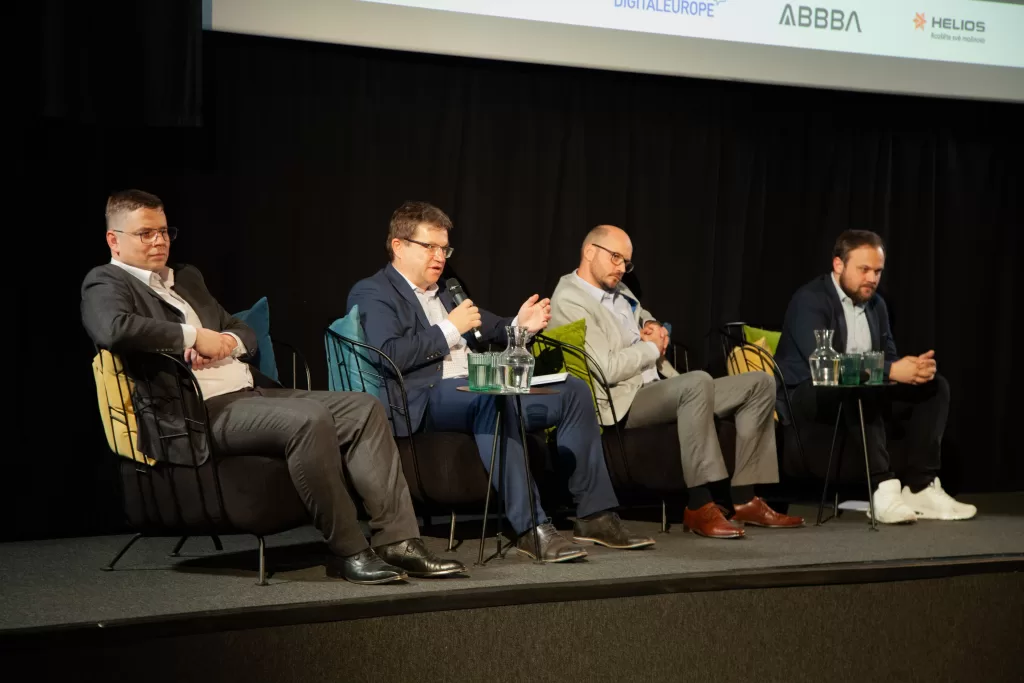
The first discussion panel followed, which was attended by Jiří Havránek, Member of the Czech Parliament for ODS (Civic Democratic Party), Juraj Strieženec, COO of Kiwi.com, Petr Očko, Chief Director of the Digitization and Innovation Section of the Ministry of Industry and Trade, and Jaromír Hanzal, Director of AAVIT. The panel addressed the quality of the current ecosystem for supporting the digital economy.
Jiří Havránek mentioned the need to significantly strengthen the European capital markets, which are currently rapidly declining, not only behind the American ones. He also mentioned the excessive regulation that is holding the EU back and the unfortunate mindset with which the Czech Republic approaches, for example, disruptive innovations such as artificial intelligence. Instead of an opportunity, many people see it as a security risk or a reason why jobs will disappear.
Petr Očko mentioned the already existing Digital Czechia strategy and the importance of the so-called digital compass (skills, public administration, business, infrastructure). He pointed out that many Czech companies are not yet ready for the digital transformation and also mentioned the reserves in the digitalisation of public administration.
The debate on subsidies in the Czech Republic is irrational
Juraj Strieženec sighed that the EU has already lost the global battle when it comes to artificial intelligence. He also expressed the opinion that with the advent of modern technologies, it may be necessary to create a new model of the social contract and expressed the possibility of processing the new HR agenda digitally.
Jaromír Hanzal reiterated that the direct or induced share of IT in the Czech GDP is 11%, thus comparable to the automotive sector. However, it is far from being given similar importance in the Czech discourse. He mentioned that the Czech Republic was the last country that restored its GDP to its pre-Covid level and drew attention to the somewhat irrational debate on the issue of subsidies that we had been having in the Czech Republic for a long time. Only the negatives of subsidies are constantly pointed out, but the irreversible form of support has an irreplaceable role, especially for activities with uncertain results such as experimental development.
Czech Republic lags behind in fast internet coverage
Another entry followed, this time with a Polish track. First, Michal Kanownik, Director of Digital Poland, gave a short video greeting. This served as an overture for a new study by our Polish colleagues, recapitulating the digital economies of the Tri-Mediterranean countries, presented by another representative of Digital Poland, Maciej Korus. The Czech Republic is rather at the forefront in most parameters, but it is catching up with countries that 15 or 20 years ago were far below us. However, the study clearly showed how the Czech Republic is desperately lagging behind other countries in high-speed internet coverage.
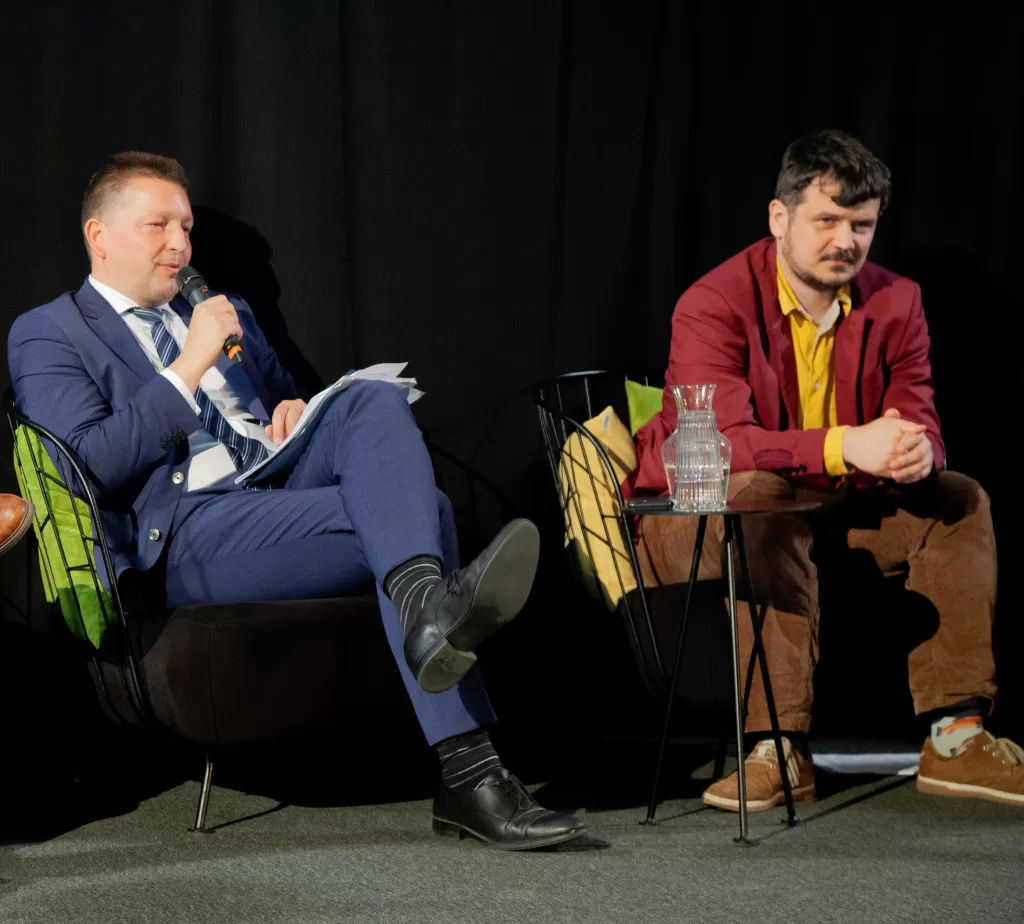
The presentation of the analysis was followed by a second panel, designated as a candidate panel. Its participants were Ondřej Kovařík, Member of the European Parliament (ANO), Pavel Havlíček, candidate to the European Parliament (SPOLU), Radim Sršeň, candidate to the European Parliament (STAN) and David Wagner, candidate to the European Parliament (Czech Pirate Party). The aim of the panel was to focus on how European politicians can influence the Czech digital business and what we can expect from them after the elections.
We have problems with the implementation of European legislation in the Czech Republic
According to Ondřej Kovařík, the Czech Republic is in a peculiar position in terms of the DESI index, where its results are very uneven – in some areas we are almost the leaders (e-commerce), in others we are lagging behind (digitalization of public administration). He pointed out that although we tend to perceive EU regulations in the digital area rather negatively, in some cases they can play a positive role. They have even caused a certain influx of venture capital from the United States because they have brought a certain degree of predictability.
Pavel Havlíček strongly criticized the Czech Republic’s long-term inability to implement European legislation, specifically mentioning the Digital Services Act, thanks to which the European Commission has launched an infringement procedure against the Czech Republic, i.e. an enforcement procedure to respond to violations of European law. He expressed concern that the situation could be repeated with other legislative proposals. At the same time, however, he expressed the opinion that the EU’s role is to be a kind of global standard-setter and that in the long term its model of regulating the digital environment is more sustainable than the US approach.
EU regulations do not strengthen European competitiveness
Radim Sršeň also expressed the opinion that the digitisation of public administration should proceed at a significantly faster pace and pointed out that digitisation offers significant potential for improving the quality of life of citizens. For example, the digital literacy of the population, according to him, is not completely low compared to other EU countries. He also explained the usefulness of so-called sandboxes, i.e. artificially created regulatory environments for testing new legislation.
David Wagner apologised in hyperbole for the tsunami of digital legislation from the European Parliament, where he has served for the past 5 years. He described the unfortunate paradox where the Czech Republic is very successful in negotiating new legislative proposals, but then fails to implement them. When it comes to the regulation of disruptive technologies such as AI, Europe is too often bogged down in unimportant details and misses the train on crucial aspects. In contrast to previous speakers, he was rather sceptical about how European regulation will help strengthen our competitiveness and also reiterated the huge disadvantage that the lack of venture capital poses for European innovative companies.
Czech game developers are among the most skilled in the world
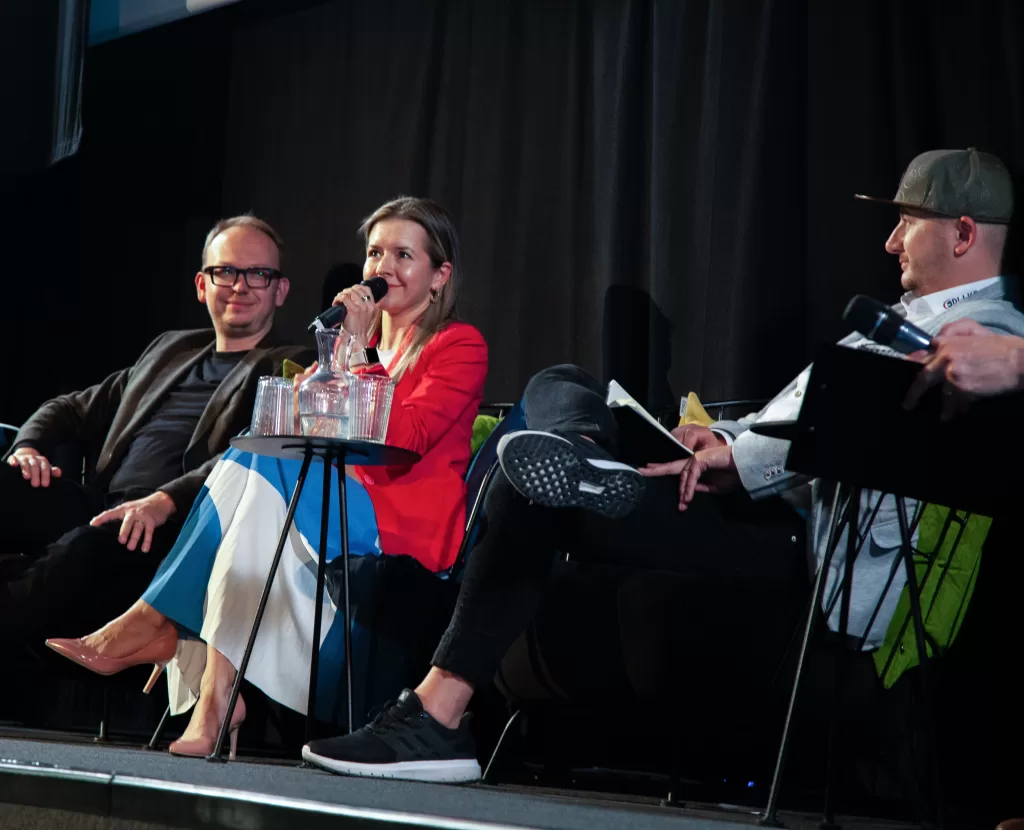
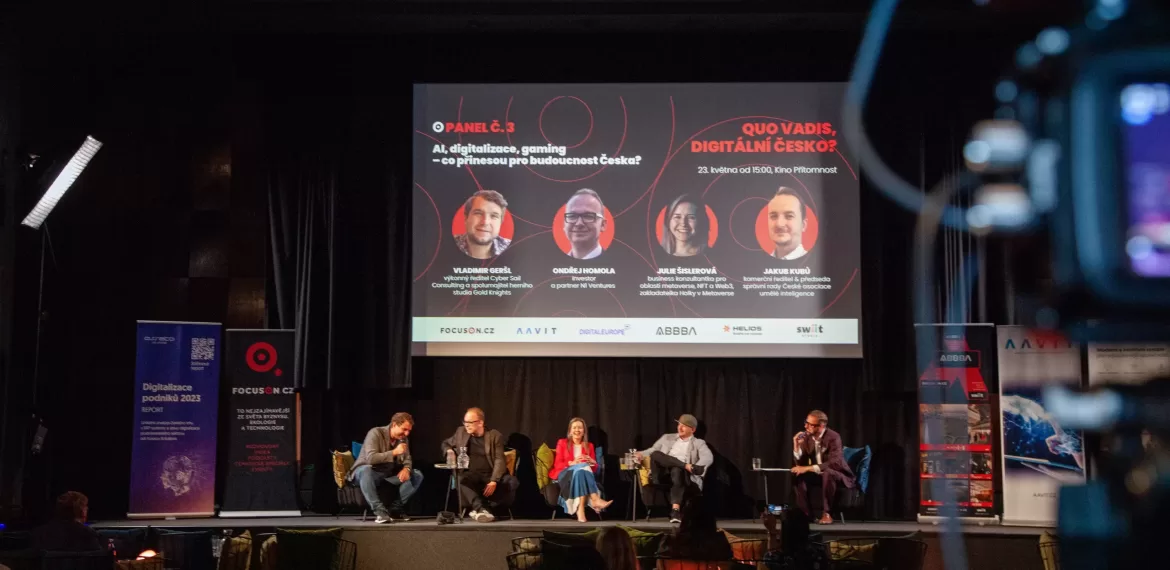
The participants of the last panel were exclusively representatives of the private sphere, namely Vladimír Geršl, CEO of Cyber Sail Consulting and co-owner of Gold Knights game studio, Ondřej Homola, investor and partner of N1 Ventures, Julie Šislerová, founder of Holky v metaverse (Girls in Metaverse) and Jakub Kubů, commercial director and chairman of the board of the Czech Association of Artificial Intelligence.
Vladimír Geršl lamented the fact that we are still unable to systematically support the game industry in the Czech Republic, which puts Czech developers at a disadvantage not only in comparison with American but also European competitors. He cited Sweden as an example of a functioning ecosystem of support for the games industry. In New York, there is a department of gaming design at a university. He also pointed out that in the Czech Republic we have extremely skilled developers who are in demand all over the world.
Ondřej Homola presented the opinion that the importance of AI will increase dramatically in the future and within 3-4 years most of the software we use will be based on artificial intelligence. He complained about how innovative business is stifled by excessive bureaucracy, which causes that, for example, to create a spin-off at the CTU requires about seven signatures. Especially in the Anglo-Saxon world, universities are much more connected to the private sphere, if only because they can run a full-fledged business themselves. Similarly, according to Homola, Czech innovative business is severely limited by the mindset that success is unforgivable, and if someone fails with his innovative plan, he has to return the subsidies and the failure has fatal consequences for his business and future life.
Returnees from abroad are often disillusioned
Julie Šislerová said that bureaucracy complicates banal tasks such as setting up a start-up. She also said there is a lack of any systematic education to encourage entrepreneurial activity in technologically interesting areas and to show successful examples. Similarly, we are not able to utilize the potential of women in entrepreneurship, nor do we try to stimulate interest in innovative technologies in children. The traditional Czech mentality, which makes us overly cautious and lacking in confidence, was identified as a bit of a hindrance. At the same time, according to Shisler, we have not been able to say what we should become leaders in and systematically focus on this field.
According to Jakub Kubů, Czech companies are lagging behind in implementing artificial intelligence. Many successful people return to the Czech Republic and then become disillusioned with the bureaucracy and the state’s inability to effectively support innovation. He also expressed the opinion that the Czech education system is still not very progressive and there is still too much cramming and memorisation. Regarding the Czech mentality, he added that we often try to do things ourselves and are therefore not very open to inspiration from abroad.
We believe that the past conference brought many interesting insights and opinions that enriched the public debate on the digital economy and the innovation ecosystem. The future will tell us what direction the newly formed European Commission and, after the elections next year, the Czech Republic will take. However, it is clear that those who stand still will not stand a chance in the ever-increasing global competition.